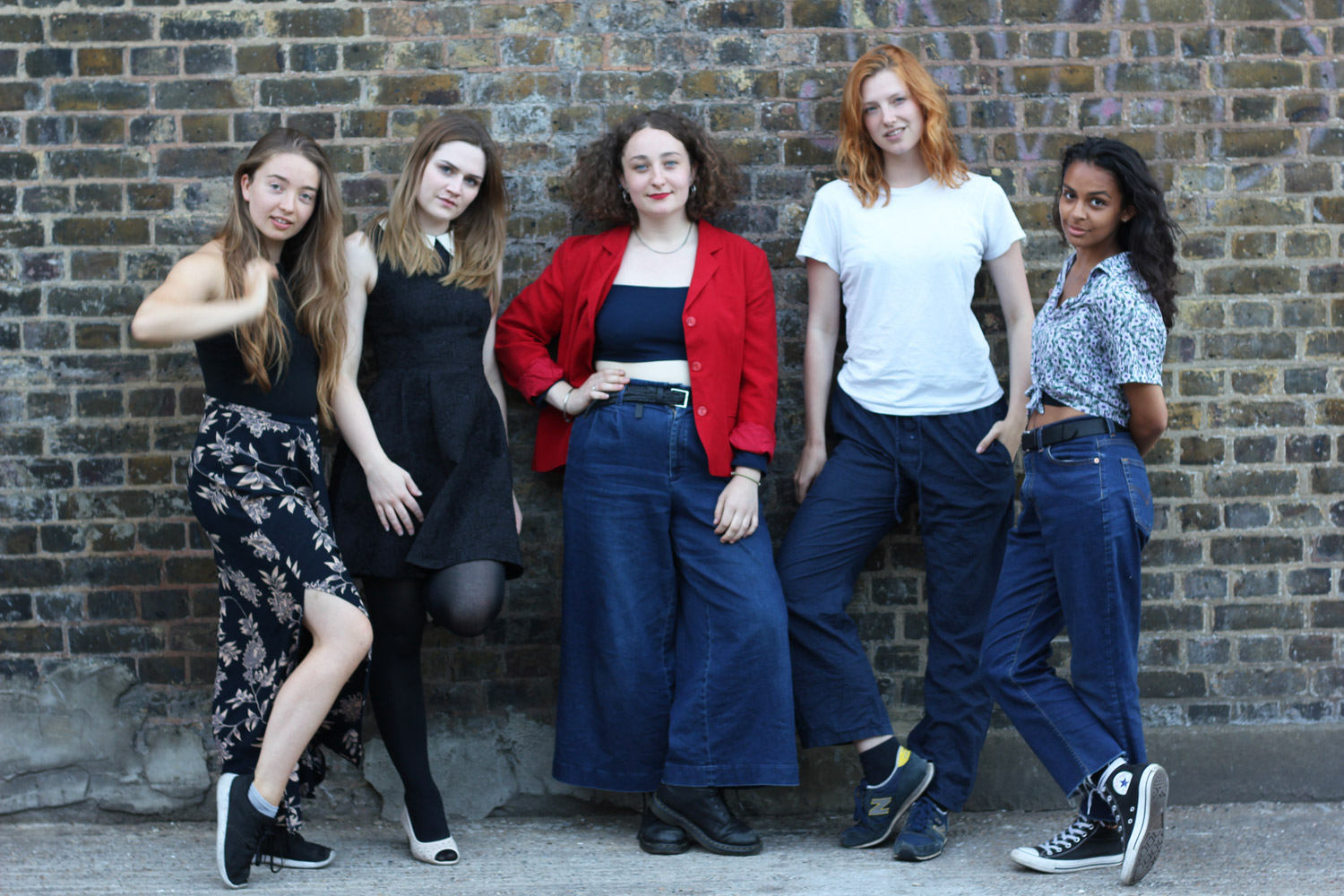
The nights may be drawing in but here at the Space we are launching our spring season! We’ve got gig theatre, psychological thrillers, concert plays, award winning playwrights, true stories, unsolved mysteries, ex-lovers and … a doll that comes to life.

12 companies. 14 shows.

This is spring at the Space.

Opening the spring season is ??????????  Edinburgh Fringe hit BRAWN. Christopher Wollaton’s gives a “commanding, tormented performance of remarkable physicality” (Broadway Baby) as Ryan, a young man whose fitness drive soon becomes a threatening obsession. A one man show that dives into our powerful desire for physical perfection and the silent struggles of the men who experience it today.


Next, the melting pot of madness that is Milk and Blood career around the Space with their Edinburgh sell out, psychedelic drug comedy THE DIP. The story of Al, and one epic, epic night. Expect confetti canons, harpoon nerf guns, original music and a 6ft tyrannical police fish (you heard). Describe as “wonderful batshit chaos” (The Skinny), this is the best bad trip of a lifetime. Oh and don’t forget nestled between the madness is the incredible Flamenco Express with a night of the “finest Flamenco” (Time Out)


Then, following their critically acclaimed Off West End run this year, Proforca theatre company bring their ?? ?? ?? ?? ??  “extraordinary” (Spy in the Stalls) FEEL to the Space.  A modern, millennial love story about a search for fulfilment, second-hand love and the hope of one day becoming something better than you are. Get ready for all the feels. (Plus if you want more check out FEEL MORE, seven brand new short plays from the FEEL universe).


Then we have the darkly comedic THE SOUTH AFREAKINS, the story of Helen and Gordon, two retirees on the brink of a life changing move but how do you build a new life when you left everything else behind? Based on writer / performer Robyn Paterson’s personal experiences this “achingly poignant” (The Stage) story about belonging and home.


The air hums with static. A black car idles across the street. Paul McCartney has been dead for 51 years. Welcome to the world of PORTENTS, a wonderfully unsettling new show from Why The Sky theatre company. From deserted motorways to city streets, this is a story of conspiracy, isolation and rebirth.


“This isn’t fair! I should be get off my tits without being bundled into the back of a van” That’s right, the Space’s Associate Company Wonderbox are back with FFS! a night of, bitesize plays from the makers of ‘A Womb of One’s Own’. Expect taboo subjects and untold stories in this proudly feminist night of theatre.


Next theatre meets psychological thriller in WE KNOW NOW SNOWMEN EXIST. Based on the true story of Dyatlov Pass Incident this is the story of five women who set off camping and none return. A mystery that has remained unsolved in 60 years, brought to life on stage. Gripping, goose bump inducing drama from up and coming director Lexie Ward.


For lovers of beautiful live music and theatre don’t miss Jared McNeill’s award winning concert play THE CONDUCTOR. Based on the composer Dmitri Shostakovich who, amidst a siege on his city in WWII, composed his haunting “symphony for the people”. The rousing true story of a sound that lifted an entire city in its darkest hour Featuring the music of the “Leningrad Symphony” performed live.


Next up award winning playwright Iskandar Sharazuddin presents POST MORTEM. The story of Nancy, Alex and a love that shattered. Fusing physical theatre and touching new writing this is an honest and comic look at young love and old trauma. Expect secret letters, messy nights and mixtapes.


From two ex lovers to two re-united school friends The Undisposables present THE WASP, an explosive thriller about two destructive women who are out to take each other down. Think childhood grudges, bittersweet revenge and the offer of a lifetime…


Last but by no means least we have Paperback Theatre with not one, but two shows! ME AND MY DOLL is a surreal comedy about workaholic Kate and her blow up doll boyfriend (you heard). The anti-rom com to end all rom-coms. Never ones to shy away from darkness they’re also performing “powerful and thought provoking” (Broadway Baby) WE NEED TO TALK ABOUT BOBBY (OFF EASTENDERS), the story of a child star, a life of fame and a dark story line…

TICKETS ARE 50% OFF TODAY ONLY

BOOK HERE

The March family

It wasn’t that I didn’t like the kindly chaplain whose daughters Jo, Meg, Amy and Beth are at the heart of the coming-of-age story that is Little Women. It wasn’t that I didn’t think he was important to them, either. But finding a modern way to adapt (and relocate to London) a novel that is really far more than that – Little Women is only volume one in a series, and we are including much of its sequel, Good Wives – meant hard choices. Every element we included had to earn its place.

The original story begins against the backdrop of the American Civil War. Mr March is absent for almost the whole of Little Women at the front, where he brings spiritual support to soldiers fighting against the slave-holding South. While his young daughters yearn for him to come home, his absence means that they face life without male protection or male moral guidance. This is what allows the sisters and their strong-minded mother the freedom to test their strength and learn by their failures and triumphs.

Miranda Horn as Beth and Amy Gough as Jo

How does that sit with us in the 21st century? Not so well. It seemed to me that while the girls missed their father and feared for him, underneath Louisa May Alcott’s always brilliant writing was the far more profound influence of their mother. It is Ma who sets the girls’ moral compass throughout both stories: it is her advice and judgement that they take to heart, and it is her absence when their father falls ill that brings them into a state of crisis. Their father’s absence plays a greater role in their lives than his presence, and so, in our version, he is just as important to the girls, but he isn’t coming home.

Finding Mr March’s place in a new version of the story wasn’t the only challenge. The original is packed with incidents. Not only can we not include them all, but some have changed meaning. What to make of Jo cutting off her hair to raise money for her mother to go to her sick father? Back then it partly signified her desire to shake of the restrictions of femininity – half thrilling, but half mortifying too. But perhaps there are other sacrifices Jo can make in our context that show how impetuous she can be for the things that really matter to her – and how hard it still is to find one’s place in a world packed with frustrating conventions.

Victoria Jeffrey as Ma and Amy Gough as Jo

There were other challenges – writing eight characters’ storylines over two acts (my previous play had one act and two characters, and I thought that was hard): writing a (SPOILER ALERT) harrowing loss that occurs during the course of the story (and rewriting it again and again, always tearfully); trying somehow to bring in Alcott’s wise and humorous eye without having the luxury of all her words – though some do remain in key moments.

The greatest challenge, however, was trying to make these changes while staying true to the four lively women Alcott created, and the complex relationships at the heart of her novel.

Fingers crossed.

Little Women tickets available now.
Must end 15th December

BOOK HERE

Here at the Space we love working with artists. It’s one of the reasons we are here and we couldn’t do what we do without them. As we continue to grow as a theatre we want to bring artists with us, nurturing them in their development and making sure we offer the right kind of support, at the right moment.

With this in mind we are pleased to announce our new Associate Artist scheme! A bespoke package of support to specifically chosen companies or artists who we believe have real, exciting potential and who we can help flourish.

So – without further ado. We present to you Wonderbox and Bric A Brac… in their own words…

WONDERBOX

Describe Wonderbox in three words?

Fun, Raucous, Feminist

How did it all begin?

We met at the National Youth Theatre. We spent a month in a room with 30 women, hotboxing our creativity and it was wonderful. Five of us decided to carry on making theatre together, because we didn’t want it to end.

If I was coming to see a Wonderbox show – what can I expect?

They’re quite high-energy, they’re funny, they’re a bit filthy. They tackle big subjects but are rather irreverent about them. Expect candid discussion, cheeky movement sequences, wacky characters, and a political sting.

What is your process of creating work?

We’re an ensemble, so it’s very collaborative. We have our writer, who’ll create a script for us to work with, or we’ll find other scripts written by women. We work with new writing rather than established texts. Then we’ll experiment in the rehearsal room, with our director guiding the process.

Proudest achievement so far?

After ‘A Womb of One’s Own’, which we performed at the Space, women told us after the show how much it meant them and that they felt no longer alone in their experience. It’s very special when someone tells you that. Seeing my mum laugh at a lesbian sex joke was a proud moment especially.

What does being an Associate Artist mean to you?

It means a lot! It shows us that people trust us and believe we make great work and see our future as bright.

What is the one thing you can’t do without in rehearsals?

Partial nudity.

BRIC A BRAC

Describe Bric A Brac in three words? 

Explorative, ensemble based and fun

How did it all begin?

Our company began over €5 pints of mojitos (yes, pints of mojitos) at a bar called ‘Bric à Brac’ in Paris, 2015. We were in our second year at Jacques Lecoq and knew we enjoyed working together so when Anna, our director, asked if we wanted to create a show together, we leapt at the opportunity! Fast forward four years later, and while Bric à Brac the bar has sadly closed down, our company has never felt more motivated and excited about the future.

If I was coming to see a Bric A Brac show – what can I expect?

You can expect fun and fast-paced heartfelt storytelling with lots of movement, humour and packed with plenty of colourful visuals! No Bric à Brac show is the same so expect the unexpected. Just sit back, relax, and we guarantee you will enjoy yourself.

What is your process of creating work?

Before getting into the room each company member prepares a personal response to the topic material. Through a process of playful and increasingly structured improvisation we are able to generate new material. From this we can then develop characters and build narratives. We use movement, object manipulation, and other theatrical techniques in order to create slick transitions, bringing the whole show together.

Proudest achievement so far?

Being named Associate Artists at The Space, of course!

What does being an Associate Artist mean to you? 

Collaboration, support, guidance, belief and trust. It’s an honour to have the backing of a theatre that is accessible to all and continues to have faith in the work we do.

What is the one thing you can’t do without in rehearsals?

A generous sense of humour and a total  willingness to clown about!


We sat down for a chat with actor turned writer/director, Tiwalade Ibirogba-Olulode ahead of the opening of her play RUSH. We talked about the creative process, the difference in roles and tackling mental health.

Hello Tiwalade, as an actor turned writer, what was it that made you want to take the leap into playwriting?

I honestly didn’t see it as me transforming or becoming a playwright, I just knew that there was a story I had to tell and I have told stories for as long as I can remember. I prefer to say that I’m an artist; acting, writing, dancing and singing are all my passions. I couldn’t identity as one. That wouldn’t be true to me, Tiwalade.

How do you feel that your acting experience informs your writing? Any elements you’ve wanted to include? Or any pet peeves you’ve wanted to avoid?

Being an actor has helped me shape the text tremendously. I always write for it to be performed. So after I finish writing a page or two, I’ll get up and act out the characters. If the words move me, I know it’s real. If not, I’ll scrap it. Then the second stage is getting the actors to read it out and seeing if they are moved too. It can be a long process of trial and error but it’s worth it in the end.
Also, directing RUSH has been a bonus because I am able to shape what was in my mind when I wrote it. I am lucky to be working with a talented group of actors and team, they are making my dream come true.

How do you begin to tell a story? Do you start with characters, a topic or a situation?

I was originally inspired by this idea shortly after I was diagnosed with anxiety. From the age of 16 I started to have panic attacks, I didn’t understand what it was, so I kept quiet about it, until 21 when I got a really bad attack on the Subway in New York and thought I was going to die, I was alone. It was only then I spoke up about it, found out what I’d been suffering with for years. It was a bittersweet moment as I now knew what I was dealing with, but on the other hand I thought if mental illness had been spoken about more openly, I wouldn’t have felt alienated for 5 years. So I started writing, RUSH was born.

What has been your biggest surprise in the process of writing your own script?

How much I laughed! I didn’t intend on RUSH being a comedy. But I guess one can find humour in the darkest hours.

Any advice for other actors who want to get into playwriting?

I started writing RUSH 3 years ago and it still feels unfinished, but it gets to a point where you must click send!

Who has been your biggest inspiration as a writer?

Life inspires me; people and moments.

As well as writing you are also directing, how are you finding the energy to do two incredibly stressful jobs?

Surprisingly not as stressful as I imagined. But, as I say this, we’re still over 2 weeks away from opening. So I’ll probably have a different answer as the 21st comes closer.

How do you manage to maintain an outside eye within the process while you are working?

I have an Assistant Director- Sophie Franklin and my close friend/Movement Director- James Monckton who are always in the room with me, giving suggestions and honest feedback. Every audience member will have different perceptions in each scene. But, there will always be a message that I want told, so it’s great having people watch to see if that’s coming across.

Talk me through a day in the rehearsal room, how do you structure your creative process?

With this being my directorial debut, I started this rehearsal process off with what I had experienced. I had the pleasure of being in Ned Bennetts’ cast in National Youth Theatre. We spent so much of the rehearsal process playing games! It was the most fun rehearsal process I have ever done! It enabled us as actors to let go, we weren’t afraid to make bold choices and I left that experience with life long friends.

I’ve brought that same energy into my rehearsal process. And now, I feel a warmth from the whole team, we laugh a lot! Saying that, we have found a great balance between work and play.

At the end of the day. Coming into this as an actor I know exactly how it feels being on the other side. That has helped to empathise with the cast.

Having now experienced three very diverse roles in the process (as an actor, writer and director) do you have any strong leanings to a path? Or do you wish to combine your talents?

From a young age when people asked me what I wanted to do, I had a list; Actor, Singer, Dancer, Playwright… Some people saw it as a joke. But now it’s all coming to fruition! I couldn’t see myself directing until recently. I was lucky enough to work with the incredible director Anne- Louise Sarks at the Lyric Hammersmith, she sat me down and asked ‘Why not?’. Throughout the rehearsal process, she was an advocate for building women up. That was a pivotal moment in my life!

I’m part of a very hardworking and creative generation. My friends inspire me everyday! The industry is evolving and changing so rapidly, as an artist it is imperative that you adapt. We have to wear many caps and I’m enjoying that. Don’t get me wrong, it’s tough! You’re having to learn a lot, but it’s fun if you’re investing in projects that you really care about.

So to answer your question, I see myself as an all round artist, I still have so much to learn but I sure am enjoying the ride!

RUSH opens Tuesday 21st of August until Saturday 25th.
7:30pm
£12/£10

Book Here

Many moons ago, whilst on a small-scale theatre tour of the north I found myself with a free evening in Manchester and so got myself a ticket to see Port by Simon Stephens at the Royal Exchange Theatre directed by Marianne Elliott. This was my introduction to Simon Stephens’ work. It was so real and hard hitting. I was absolutely blown away by it. I thought then this is the type of writing I would relish tackling and the type of theatre I dream to be a part of.

Simon Stephens is a remarkable and prolific playwright, he writes emotionally, intelligently, and with huge passion. As an actor and writer I find his work dangerous, exciting and very inspiring. He often tackles the darkness of the human soul and forces us to think about what it is to be human. I find Stephens’ writing the stuff that shakes you at your core, he gets right in there, and chews you up and spits you out, and it’s always a rollercoaster of an experience for an audience. I have seen twelve of his plays, a couple multiple times, and read more.

The first time I read Bluebird I cried. It is a deeply beautiful heart felt wonderful play for actors, full of characters that we recognise, people we’ve met, know, have observed or heard about who dealing with struggling, coping with real, devastating and traumatic incidents and events. Each character reveals something deeply personal through talking with the mini cab driver Jimmy, played by Jonathan Keane, and he to them, the beauty is that they are complete strangers to each other.

It’s great to be working at Space theatre on Bluebird directed by Adam Hemming in a role I have always wanted to play. Janine Williams is quite possibly one of the hardest roles I’ve worked on and I love her. She is a complex character, she is described as “smartly dressed, manic depressive former teacher”. There’s also two further pieces of guidance in the stage directions “she has started crying”, and “almost angry”, pitching those right in the playing of her has been a positive challenge and I still feel, one week in as though I am grappling with it. There is something brutal about her, there is something exciting and dangerous about her, something very sad, mixed with her despair and anguish.

The role requires employing craft, and not just relying on feeling emotions, especially as she is so changeable. She is gripped by an erratic stream of consciousness in the moment. Some of her sentences are as short as one word and her questions and active reflection on her current situation and what she thinks about people and their conduct towards each other is deep. Janine is so rich, she requires a certain energy. I have to hit the ground running.

When I know I’ve done it right and worked well with Jonathan I come off stage and for a moment feel so sad – Janine is a character that as an actress it is best as much as possible to leave her at the theatre, I think that applies to every character in Bluebird.

We are blessed with a great company, and all enjoy working together. We only have a handful of shows left and we would love it for you come and share in this experience.

BOOK TICKETS FOR BLUEBIRD

THANK YOU to everyone who has come to see BLUEBIRD by Simon Stephens so far. We are so proud of this show – it’s a real beauty… but don’t just take our word for it…

It’s beautifully written and acted and well worth a watch
Upper Circle Theatre 5 STARS

Nothing could prepare me for the stories I was about to be told (and how brilliantly they were told!)
Theatre Box Blog 5 STARS

Viscerally funny, and celebratory too; a love affair with language, with London, and with the messiness of being human
The Spy In The Stalls 4 STARS

If there’s a play that will give you hope for London in its current haze, that play is Bluebird.
The Play’s The Thing UK

Completely absorbing
Act Drop, 4 STARS

A moving study of grief and guilt, imaginatively staged and set in a London we can all recognise
Blog of Theatre Things

Hard-hitting, bitingly written and with a cast that just won’t quit […] a love song to the nation’s capital that will break your heart
A Younger Theatre

Jonathan Keane’s performance as Jimmy is key to the success of the piece. He is beautifully understated.
Sue In The Stalls

Plenty of gut-wrenching emotion
The Upcoming

A deep well of humanism… Bluebird takes you on the ride of your life.
Seen London

 Audience Reviews

Very moving and very human- heartbreaking
@TobiasDGraham

Just bloody wonderful… exquisite writing. elegant direction
@theCozens

It was fantastic. Brilliant cast & such a moving play”
@StephMilesUk

A powerful story – human life and love in all its power and frailty – set on a London on a hot summer night, immersive theatre in every way!
@FarrarMaggie

MUST END 4TH AUGUST

BOOK TICKETS

How many plays have you seen featuring Iranian characters? Probably not many, if any! Rather than sitting around lamenting the fact that Iranian stories have scarcely been told on stage in London, I decided to dive headfirst into sharing these stories myself.

You may have heard about Nazanin Zaghari-Ratcliffe, the dual British-Iranian citizen who was arrested in Iran in April 2016. She was returning to London after visiting family with her baby daughter. She had done nothing wrong; to this day, she remains imprisoned in Iran, her daughter now living with her Iranian grandparents. Then, last year Trump put his travel ban in place, temporarily blocking citizens from 7 Muslim countries from entering the US. Suddenly, Iranian-Americans who had lived and worked in the US for years, as well as their families, were blocked off from the place they called home.

These cases of dual belonging – the home that comes with your ethnicity and the one that comes with your nationality – kept swirling around in my head. I kept questioning what it means to be a citizen of a country, and what a country would do for its people when they needed help.

With all this going on last year, I felt I needed an outlet to respond. My own parents were political refugees who fled Iran in the 90’s, and so I felt a sense of duty to all the Iranian people who were being negatively affected by these issues.  Naturally, the answer to my question of ‘what can I do?’ became ‘make a piece of theatre about it’.

To create CITIZEN, I set about collecting verbatim material from a range of sources. From Nazanin’s diary entries, to interviews with my mum, conversations with the cast, and questionnaires sent to Iranians around the world. What came back were stories that were in equal turns fascinating, harrowing, moving and funny.

Drawing on my own experiences was a key part of the process. I was born and raised in Australia to Iranian parents, so I started out writing stories that I remembered from childhood. There was the culture clash of being raised in a traditional Iranian household in Australia, the stories that my mum had told me about leaving Iran, and my own experience of visiting Iran once when I was eight years old. I then contrasted those stories to my feelings about Iran now, as an adult, and the way that I’d seen Iran represented in the media.

Something I’ve learn about writing from personal experience is to find a way to disconnect from your story. An experience that might have been powerful to me in the moment doesn’t necessarily translate to an audience, so there were times when I had to be willing to cut or edit moments in order to make the best work. From the get-go I invited my cast to be co-creators – to be the outside eyes to the sections of script drawn from my life, allowing them to give me honest feedback on it as they would any other part of the play.

As I reflect on the work we’ve made and what I want audiences to get out of it, one word comes to mind: hope. Even though some of the migration stories we’ve incorporated into the show have sadness and displacement within them, the very act of sharing them is uplifting. All the people who provided their stories – from those we interviewed to those who wrote journal entries and letters for all to see- wanted the world to know that even in the darkest of times, there is hope. And so, in creating this piece of theatre, I – as well as my cast and the many contributors whose words we’ve used – want the audience to walk away remembering that at the end of the day, regardless of our ethnicity or citizenship status, we are all human. We all want and need the same things, and the more we remember this, the more each of us can contribute to a more equal society.

CITIZEN runs 24th April – 5th May.

CLICK HERE TO BOOK TICKETS

We interviewed Henry C Krempels, playwright of The Sleeper.

The show is based on your own personal experience on an overnight train in Europe at the height of the immigration crisis – what happened?

I was living in Italy at the time and would take the train whenever I came home (I have a fear of flying). Over about a year or so, I noticed the train had a strange collection of people, from the ones in full pyjamas, to the ones who spent the night hammering home miniature bottles of wines, to the cheap seats, where I was. The people here often had huge amounts of luggage, and after talking to a few of them, I found they were either moving home or moving away from wherever they’d come from.

One night, I came back to my cabin and found a woman sleeping in my bed. I sort of stood over her, trying to figure out who she was and did that very British thing of assuming I had got the wrong bed or something like that. One of the other passengers in the cabin shouted something in Arabic at her and she bolted up, pushed me out the way, went down the corridor and checked bed after bed after bed until she disappeared from sight. After that, I went and spoke with the train manager which sort of initiated a search. That last bit, is also a lot of what the play is about.

How did the show evolve from there?

Well, I wrote this story up for VICE Magazine, during which time I desperately tried to find her/find out about her. I wanted to help her somehow. I think I wanted it to be one of those good news stories you see on Twitter. Let’s find this woman, maybe set up a crowdfunding page, help her out, get her some money, make sure she’s safe.

Then I started to examine what it was I wanted from that. What I was doing, and why I was doing it. The whole thing felt skewed. I knew nothing about her and what if, if I found her and she didn’t want to be found? There was an assumption that she wanted my help and that’s something I challenge heavily in the play.

These questions, along with the memory of that moment, felt very suited to the play form. So I wrote something for a scratch night in January 2017. I organised some workshops with refugees and asylum seekers who might be able to help me with this story and who themselves might like to tell their stories. Then I went away and put together something more whole. We performed it in Edinburgh, got great feedback and now, this time, I’ve gone away again and I’ve made sure it’s hitting all the right notes.

You interviewed Syrian asylum seekers as part of the process – how did you incorporate these into the show?

The play really plays with the line between fact and fiction (which I happen to think doesn’t exist). I’ve interwoven the two, things people have told me and things I’ve found out but I think it would be impossible to just lift them apart. The interviews, some of which is in the text verbatim, felt like rock on which the play was built. If you see it, you’ll see the play is sort of split into two worlds. The playing out of ideas and situations and the factual which sort of takes the form of memory and a dialogue with the woman in my bed. The two are constantly talking with each other.

Having said all that, pretty much everything in it, in some way or another, happened to someone.

What has been the most challenging aspect of bringing this show to life?

The questions about representation and whose story this is were easily the most difficult part of this In fact, that part has been so challenging, I organised some workshops with the Young Vic called Whose Life is it Anyway? With the aim of dissecting refugee theatre (with those who make it). It’s so difficult and so interesting how you put stories on stage that a) don’t belong to you (although in this case, I am in the story too) and b) belong to people who don’t have much of a voice. What’s my role in that and how do I go about it?

I think the other thing was making this an entertaining piece of theatre. Why put on refugee theatre if you’re just going to hit people where it hurts and then lecture them when you’ve done that. I wanted The Sleeper to be, if nothing else, a chance to show that this stuff, which is hard and problematic and important can also be a good night at the theatre.

What’s been the best part of the process?

One moment which I think the others will agree with me on:

We were doing a workshop and one of our participants was in charge of directing a scene between the train manager and the character who represents me. It’s a moment where we’re really looking into the soul of the train manager and trying to understand why he does what he does.

Halfway through, this woman (I ‘m not going to say her name but she has been through this sort of journey herself) stopped the two actors, stood up and made them do the whole scene lying on top of each other. As soon as she asked them to start again, she burst out laughing, a big, gut laugh which was totally contagious and spread around the room. For the next five minutes everyone lost it and was basically rolling around the room. There was something so cathartic about that moment, and made me realise lots of things, one of which was that she was one of the most courageous women I’ve ever come across and that I couldn’t admire anyone more than I did her, right then.

Tell us about the ‘Refugee Fund’?

Well, we want to make The Sleeper and the stories contained in it, as accessible as possible to the people whose voices are represented on stage. Depending on how much we can raise, the fund will to pay for refugees and asylum seeker based in London to come to see our play for free, and then pay for them to get there and get home.

Theatre is expensive and can be seen as exclusive. I think a lot of people don’t think theatre is for them. And this is a big challenge of ours (Anima’s) to do whatever we can, however small or large, to make that change.

What impact do you hope ‘The Sleeper’ will have on the audience?

I think that sort of depends on who the audience is. I hope that anyone seeing it who has been through that experience, or something similar, can find something true in it -something recognisable.

I think for people who haven’t been through that experience, my main aim is to alter, in some way, their ‘idea ‘of a refugee and that experience. It is so easy to slip into pity. If you think about the images we use for refugees. That dreadful image of the boy drowned on the beach. I know that eventually had a positive impact and made people realise that something needs to be done. But really? Are we going to wait until that kind of thing happens, the most tragic thing possible, to do something? I think it’s about finding something human and not relying on trauma. If those workshops and this play has taught me anything (they taught me a lot) it’s that people are way more than the trauma they’ve endured.

Describe ‘The Sleeper’ in three words.

Is this real?

Click here to book tickets for The Sleeper.

The Space first opened its doors as a theatre in 1996. Think John Major. Think unrecognisably low house prices. Think Spice Girls. A long time ago. Since that time we have become a valued venue for audiences, a vital incubator for emerging artists and a crucial creative lifeline for our local community. Put simply, our Grade II listed building is in constant use which in turn means constant maintenance.

Well, we have some wonderful news. For the past two years we have been fundraising to replace our house lights system. These are the lights that allow audiences to find their seats safely and much needed rehearsals to continue on into the evening. We are beyond thrilled to announce that we have reached our target and the work is starting this week! Our new lights are going to be more environmentally friendly, cheaper to run and more flexible to our needs. This means we can conserve energy and save money which we can channel back into managing our 12-month theatre programme, in-house company, artist development opportunities and participatory theatre project

It is no understatement to say that this would simply not have been possible were it not for the artists, audiences and our local community who have rallied around us donating their time and money to our campaign. We are a small team here at the Space meaning our theatre relies on the support of volunteers. From quiz nights to a Christmas cabaret, raffles to sponsored walks, we have been overwhelmed by people’s generosity, dedication and undefeatable attitude and are so grateful that we know so many wonderful artists and audiences who share a love of this building and the theatre we support. Special thank you goes to our Event Management Committee for their tireless fundraising efforts, the artists who have performed at our fundraisers out of the goodness of their heart and the Theatres Trust for their grant which provided a real boost when we needed it most.

So whether you have donated money, bought a raffle ticket, spread the word about our efforts or simply encouraged us to keep going we thank you all, sincerely and deeply.

We’re going to hold an informal ‘switching on’ ceremony on Thursday 29th April at 6pm, please do feel free to join us!

The reviews are in for “beautiful”, “mesmerising”, “chilling” ‘Frankenstein’ here until 10th March.

 This Frankenstein has an atmospheric, gothic feel that literally sends chills down your spine […] The cast do an incredible job and the whole production looks and feels beautiful, and all without a neck bolt in sight.

5 STARS

Theatre Weekly

Isabel Dixon and Katherine Timms’ feminist reimagining of Frankenstein does ample justice to Mary Shelley’s still astonishing work, in a compelling and chilling tale packed with creative flair.

4 STARS

Act Drop

A maelstrom of physical theatre, mime and puppetry […] engrossing, resourceful and concise in a way that fuels the urgency of the story being told.

The Stage

This feminist revival of Shelley’s Frankenstein is a must-see for every Frankenstein lover.

A Younger Theatre

inspires pity and terror

London Grip

a must-see for Shelley fans and newcomers to the story – a dynamic, haunting production that will linger long in the memory.

4 STARS

Fairy Powered Productions

This female-led version of Mary Shelly’s classic Frankenstein is creative, energetic and, despite changing the gender of the lead characters, faithful to the original.

Reviews Hub

Click here to book tickets